Balance Training Isn't Just for Older Adults Who've Already Fallen
Balance training gets marketed almost exclusively toward older adults recovering from a fall or worried about one, which leaves a large group of younger and middle-aged adults skipping a capacity that is already quietly declining. Here is why balance erodes well before any fall risk becomes obvious, who actually benefits from training it early, and the simple daily drills that need no equipment at all.
Why Balance Declines Silently Before Any Fall Risk
The early-decline reality: the the-decline-starts-in-the-thirties (the proprioceptive and balance capacity beginning a gradual decline well before any age typically associated with fall risk — the it-starts-decades-early), the the-sedentary-lifestyle-accelerates-it (the modern sitting-heavy routines reducing the varied movement that naturally maintains balance capacity — the disuse-not-just-age), the the-first-sign-is-subtle (the first noticeable sign often being something minor — a wobble on uneven ground, needing a hand on a wall — long before any dramatic loss — the subtle-signs-precede-obvious-ones), the the-vision-and-inner-ear-compensate-for-a-while (the body relying on vision and the inner ear to mask early proprioceptive decline, delaying awareness — the compensation-hides-the-problem-temporarily), the the-athletic-people-aren’t-exempt (the general fitness and strength not automatically protecting balance specifically, since it is a distinct trainable capacity from the balance-and-ankle-strength-connection-guide logic — the fit-doesn’t-mean-balanced), and the reframe (the silent decline as starting decades before any fall-risk conversation typically begins, which makes ‘wait until it’s a problem’ a genuinely late strategy).
Who Actually Benefits From Training It Early
The wider audience: the the-athletes-and-active-people (the balance training directly improving performance and injury resistance in running, cycling and most sports — the performance-benefit-not-just-safety), the the-desk-workers-with-reduced-daily-movement (the sedentary work reducing the incidental balance challenges daily life used to provide naturally — the desk-work-erodes-what-daily-life-used-to-train), the the-anyone-with-prior-ankle-or-knee-injury (the previous joint injuries often leaving subtle balance deficits that never fully resolved without specific training — the old-injuries-leave-a-balance-gap), the the-new-parents-carrying-and-lifting (the balance directly relevant to safely carrying a child or navigating uneven ground while distracted — the practical-everyday-relevance), the the-anyone-planning-to-stay-active-long-term (the balance capacity built now directly determining how much decline shows up decades later from the balance-training-aging-guide logic — the investing-now-for-later), and the frame (the real beneficiary list as athletes, desk workers, anyone with a past joint injury, new parents, and essentially anyone planning to stay active — which is to say, nearly everyone, not just people worried about falling).
The Simple Daily Drills That Need No Equipment
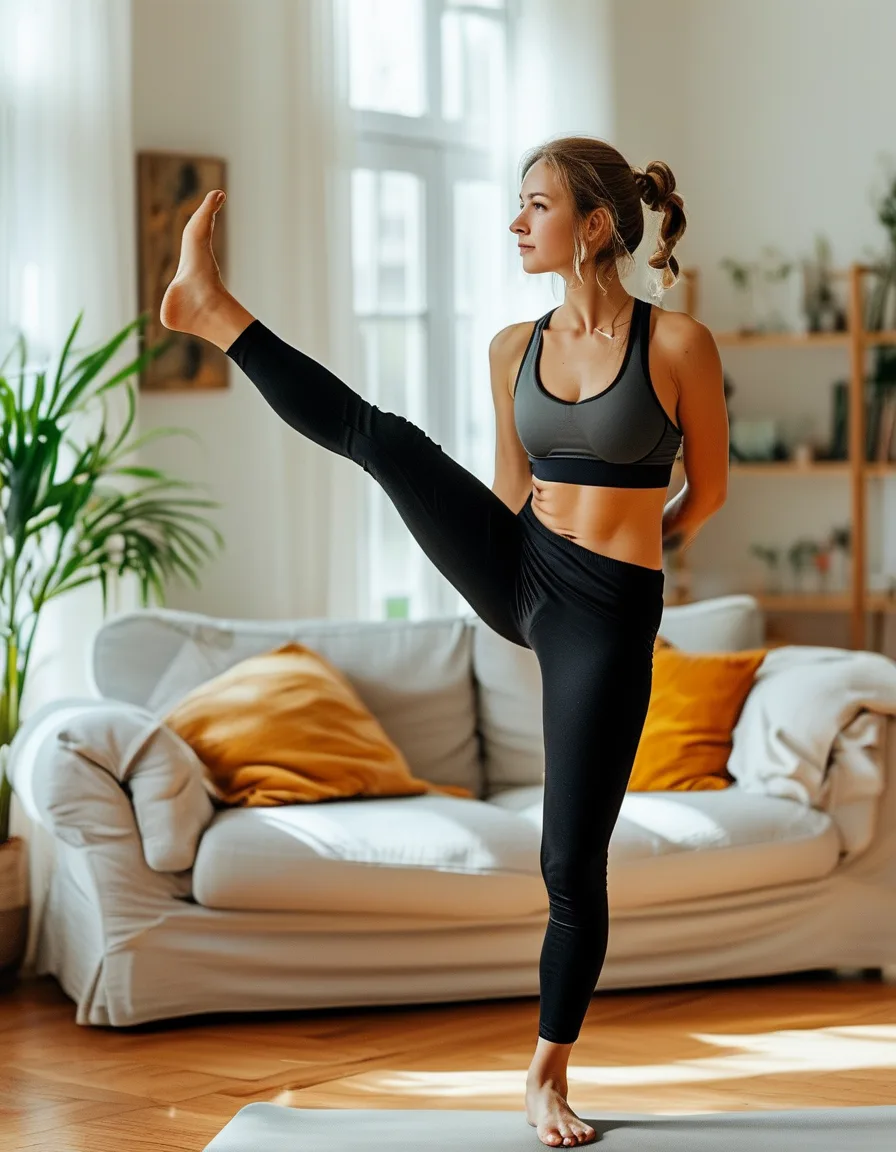
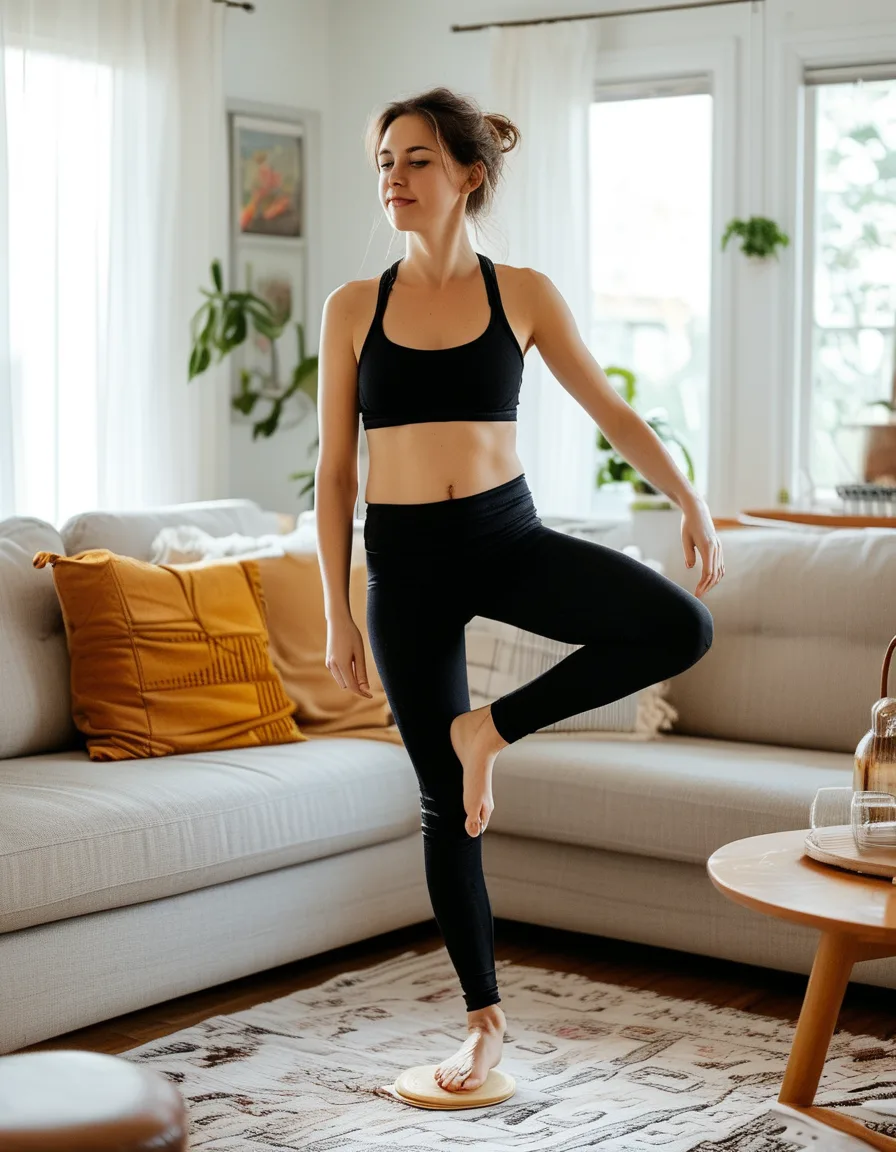
What actually builds it: the single-leg-stance (the standing on one leg for thirty seconds per side, the foundational drill everything else builds from — the the-simplest-most-effective-starting-point), the the-eyes-closed-progression (the closing the eyes during a single-leg stand once the basic version feels easy, removing visual compensation — the removing-a-sense-increases-the-challenge), the the-uneven-surface-practice (the standing on a folded towel or pillow to add mild instability — the household-items-work-fine), the the-tandem-walking (the walking heel-to-toe in a straight line, a classic simple balance-and-coordination drill — the an-easy-hallway-drill), the the-stack-it-on-daily-tasks (the practicing single-leg stance while brushing teeth or waiting for coffee, removing the need for a dedicated session — the habit-stacking-removes-the-time-excuse), and the frame (the daily drills as single-leg stands, the eyes-closed progression, uneven-surface practice, tandem walking, and stacking it onto existing habits — a few minutes a day, no equipment, and no need to wait until falling becomes a concern).
Balance capacity begins a gradual, largely silent decline starting in the thirties, well before any fall-risk conversation typically begins, and general fitness or athleticism doesn’t automatically protect it since it is a distinct, separately trainable capacity. The real beneficiary list extends far beyond older adults worried about falling: athletes get a genuine performance edge, desk workers lose the incidental balance challenges daily life used to provide, people with old ankle or knee injuries often carry a lingering balance gap, and anyone planning to stay active long-term benefits from investing now rather than later. Build it with single-leg stands, an eyes-closed progression once that feels easy, practice on an unstable surface like a folded towel, tandem heel-to-toe walking, and stacking any of these onto an existing daily habit like brushing teeth — a few equipment-free minutes a day, started well before it becomes a safety concern.
Keep Reading
This article is for general informational purposes only and is not medical advice. Always consult a qualified health professional for guidance specific to you.