Balance Training: The Fitness You Don't Miss Until You Need It
Quick Answer: Balance starts declining measurably in your thirties and forties — earlier than strength — because modern life barely uses it. Test yourself now: single-leg stand under 30 seconds means start today. Two minutes of daily practice, done while the coffee brews, produces noticeable improvement within a few weeks because balance responds to training faster than almost any other fitness quality.
Strength loss shows up in the gym. Cardio loss shows up on the stairs. Balance just quietly leaves, and most people discover it via a wobble that scares them a decade from now.
That’s the whole problem with balance: it’s the only fitness quality with no early warning system. The good news is that it trains fast, and two minutes a day is a genuine dose.
Why Does Balance Decline So Early?
Balance isn’t one system — it’s a collaboration between four:
- Vision — your eyes tell you where vertical is
- Vestibular system — the inner ear senses head position and acceleration
- Proprioception — nerves in joints and muscles report where your limbs are
- Reflexes — the speed at which your body corrects before you consciously notice
All four are use-it-or-lose-it, and modern life barely challenges any of them. Flat floors. Cushioned, supportive shoes that dull foot sensation. Handrails everywhere. Eight hours a day seated, which is zero hours of balance demand.
The result is that measurable decline often begins in the thirties to forties — earlier than strength, earlier than most people would guess. Single-leg stance time has drawn serious research attention as a health marker precisely because it tracks so closely with overall function, and because it turns out to be trainable at every age.
That last part is the point. This isn’t a decline you watch; it’s one you reverse.
How Do You Test Your Own Balance?
Two tests, two minutes, no equipment. Do them near a wall or counter you can grab.
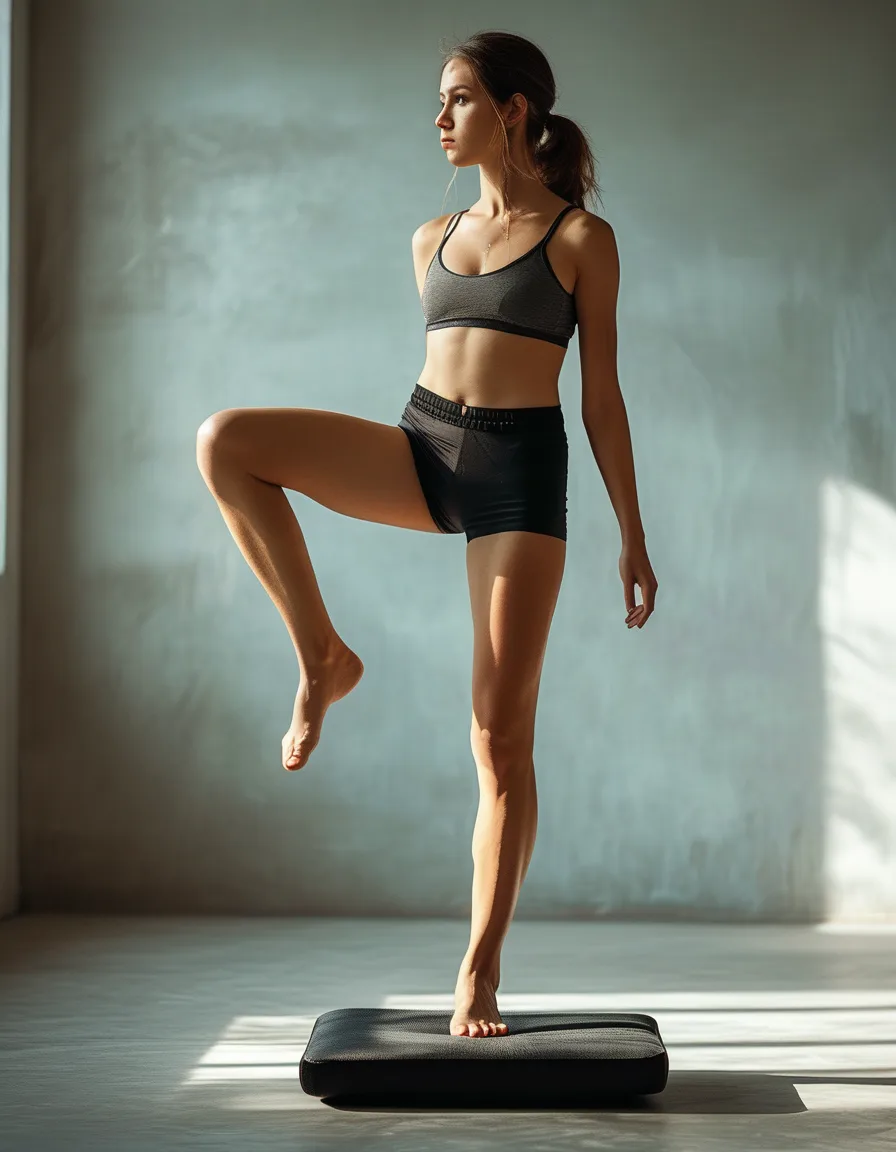
Test 1: Single-leg stand. Bare feet, hands on hips, lift one foot to about calf height and start a timer. Stop when you touch down or grab something.
- Under 10 seconds — start today, and hold a counter while you train
- 10–30 seconds — typical, and clearly worth improving
- 30–60 seconds — solid
- Over 60 seconds — good; move on to the eyes-closed version
Test 2: Single-leg stand, eyes closed. Same setup, eyes shut. This removes vision and forces the inner ear and proprioception to work alone. Expect a dramatic drop — under 10 seconds is completely normal, and it’s the number that improves most with practice.
Test 3: Five sit-to-stands. From a standard chair, stand and sit five times without using your hands, timed. Under 10 seconds is a good functional benchmark for most adults.
Write the numbers down. Retest monthly. Watching these move is what keeps the habit alive.
What Does a Two-Minute Daily Practice Look Like?
The rule that makes it stick: attach it to a habit you already have. Scheduled as a workout, balance training dies by Thursday. Attached to the coffee maker, it survives for years.
While the coffee brews — single-leg stand, 30 seconds per side. Switch legs when you switch tasks.
Brushing your teeth — two minutes of standing on one leg, one leg per minute. Nobody has ever missed a session of this.
Down the hallway — heel-to-toe walking, 10 steps. Yes, the roadside sobriety walk. It’s genuinely demanding balance training and it costs you eight seconds.
Barefoot time — your feet are sensory organs, and shoes mute them. Socks off on varied surfaces — carpet, tile, a folded towel, grass in summer — wakes up the proprioceptive input that supportive footwear suppresses.
Total: about two minutes. The trick isn’t the exercises. It’s that you never have to decide to do them.
How Do You Progress Balance Training?
Once single-leg stands get easy, make them harder in this order:
- Close your eyes. The single biggest jump in difficulty available, and it costs nothing.
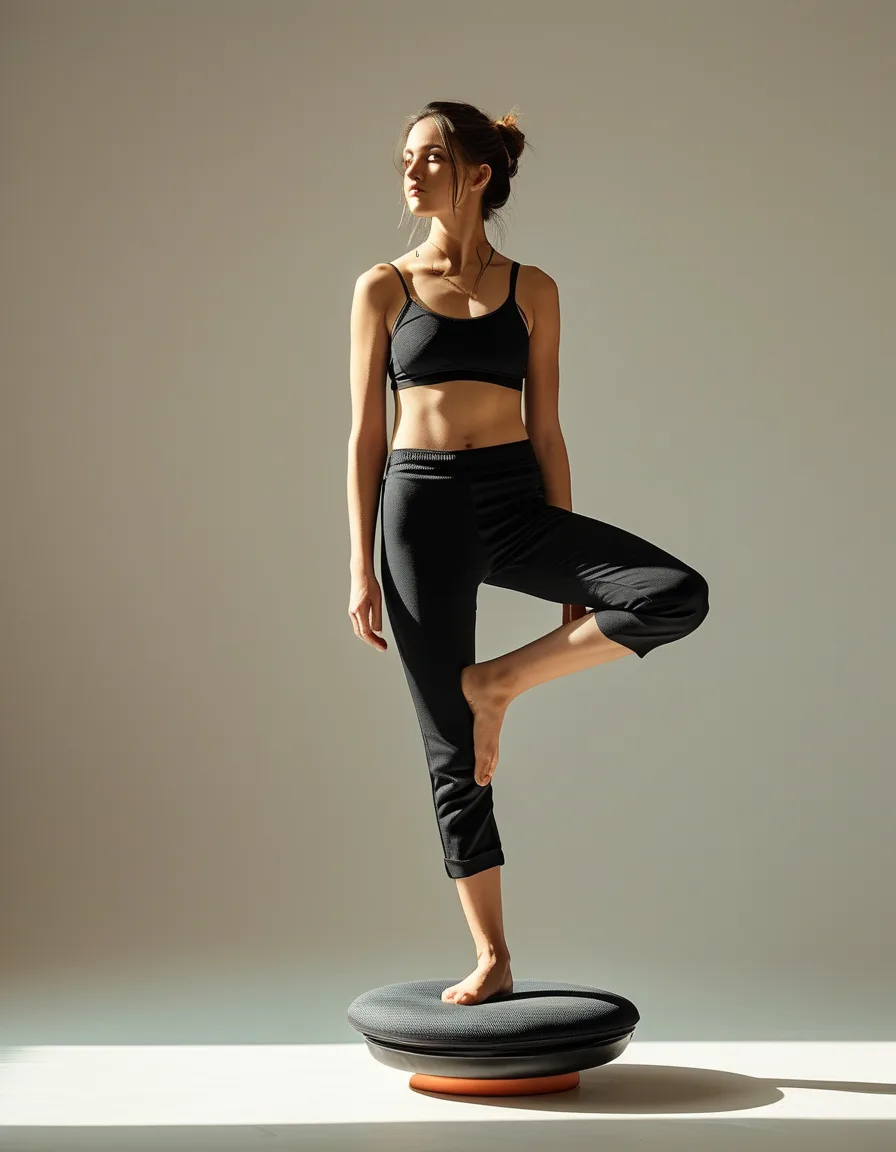
- Add an unstable surface. A folded bath towel first, then a balance pad. Not a wobble board on day one.
- Move your head. Turn to look left and right while balancing. This challenges the vestibular system directly and is the version most relevant to real life, where falls happen while you’re turning to look at something.
- Add a task. Balance while catching a ball, or while doing arm circles. Real balance is always divided attention.
- Add strength. Single-leg reaches and single-leg deadlifts train balance and posterior-chain strength at once. This is the efficient tier and where most people should end up.
Sports that train balance for free: tai chi has a genuinely impressive research record for fall prevention in older adults. Yoga, dance, skating, and racquet sports all count. If you already do one of these, you’re further ahead than you think.
What Nobody Tells You About Balance
Balance is side-specific. Almost everyone has a distinctly worse leg — often a 15–20 second gap. Train the weak side more, not equally.
Improvement comes fast, then slows. Most people see meaningful change in 2 to 4 weeks, because early gains are neural rather than structural. Don’t get discouraged when the rate levels off; that’s normal.
Fatigue tanks it. Test at the same time of day. Your balance at 9pm after a long day is not your balance.
It’s not just about falls. Better balance means better single-leg strength, better running mechanics, fewer ankle sprains, and more confidence on uneven ground — benefits you collect now, not in forty years.
Shoes change your score. Test barefoot for consistency. Cushioned trainers make the test easier and the training less useful.
If you have frequent dizziness, vertigo, sudden unexplained balance loss, or numbness in your feet, see a doctor rather than training through it — those point to vestibular or neurological issues that need assessment, not practice.
FAQ
How long does it take to improve balance?
Most people notice a difference in 2–4 weeks of daily two-minute practice, with single-leg stance times often improving 50 percent or more in that window. Early gains are largely neural, which is why they arrive so quickly.
Is balance training only for older adults?
No — it’s most valuable before decline is noticeable, because you’re building from a higher baseline. Athletes train it for injury prevention; the fall-prevention benefit is simply the same quality collected decades later.
Can I train balance if I’m already unsteady?
Yes, and it matters most for you. Stand beside a kitchen counter with fingertips resting on it, and progress to one finger, then none. Reducing support gradually is the entire progression.
TL;DR:
- Balance declines from your thirties — earlier than strength — and silently
- Test now: single-leg stand, eyes-closed version, five sit-to-stands
- Two minutes daily, attached to an existing habit, is a real dose
- Progress: eyes closed → unstable surface → head turns → added task → single-leg strength
- Most people improve noticeably in 2–4 weeks
- Persistent dizziness or numbness is a doctor conversation, not a training one
Test the numbers, train at the coffee maker, progress to eyes-closed. Balance is the retirement account of fitness — tiny daily deposits, and future-you collects the interest.
Keep Reading
This article is for general informational purposes only and is not medical advice. Always consult a qualified health professional for guidance specific to you.