Balance Training and Aging: Why It Matters Earlier Than You Think
Quick Answer: Balance ability begins a slow, measurable decline as early as your 30s-40s, well before it becomes noticeable — waiting until your 60s or 70s to start training means working against decades of unaddressed decline. Starting balance work now, even 5-10 minutes a few times weekly, preserves ability rather than just rebuilding it later.
Balance training gets marketed almost entirely to older adults, which creates the impression it’s irrelevant until then. Research on balance and proprioception says otherwise — the decline starts far earlier than the intervention typically does.

When does balance ability actually start declining?
Research on proprioception (your body’s sense of position in space) shows measurable decline can begin as early as the 30s, accelerating more noticeably after 50 — well before most people notice any functional change in daily life.
The catch: because early decline doesn’t show up as obvious wobbling or falls, it goes completely unaddressed until it’s already progressed for years, which is exactly why balance training skews toward older populations in marketing despite the biology starting a decade or two earlier.
Why does starting balance training early matter so much?
Because balance ability, like strength, responds to a ‘use it or lose it’ pattern — regular practice maintains the neural pathways and small stabilizer muscles involved, while inactivity lets both decline faster. Starting in your 30s-40s means maintaining an already-good baseline, which is measurably easier than rebuilding lost balance ability at 65.
This mirrors bone density research: peak bone mass is built early and maintained, not restored after significant loss — balance ability follows a similar ‘preserve early’ logic.
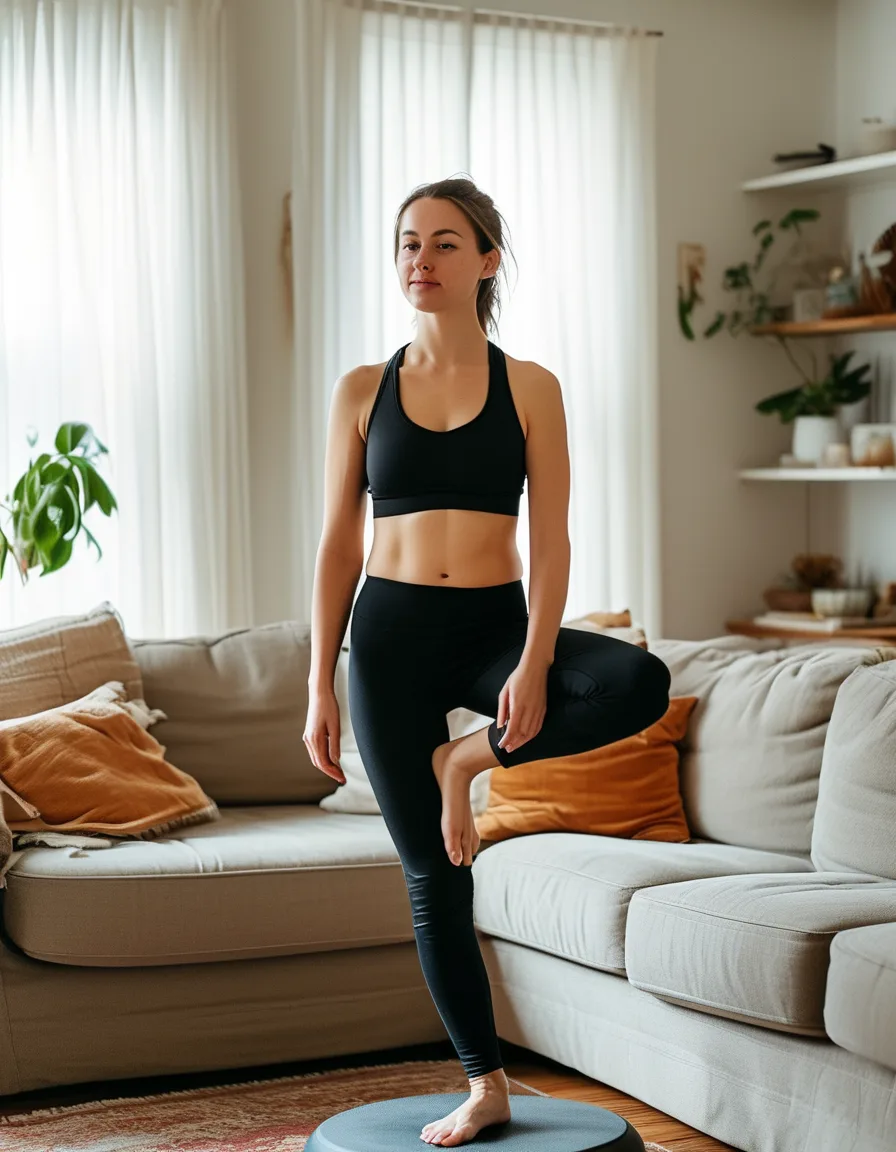
What does effective balance training actually look like?
Single-leg stands (30-60 seconds per side, working up to eyes closed for more challenge), heel-to-toe walking, and unstable-surface work (a pillow or balance pad under one foot during simple exercises) are the core building blocks.
5-10 minutes, 3-4 times weekly is enough to build a meaningful base — balance training doesn’t require dedicated long sessions, which makes it one of the easier habits to actually sustain.
Myth vs Fact: Balance Training and Age Edition
Myth: Balance training is only useful once falls become a real risk. Fact: The preventive value is highest when started before decline is noticeable — reactive training after falls have started is playing catch-up.
Myth: If you’re active and fit, your balance is automatically fine. Fact: General fitness and cardio don’t specifically train the proprioceptive and stabilizer-muscle systems balance relies on — it needs its own dedicated practice.
Myth: Balance can’t really be improved, only maintained. Fact: Studies consistently show balance ability improves measurably at any age with 6-8 weeks of consistent targeted practice — it’s trainable, not fixed.
FAQ: Balance Training and Aging Questions, Answered
What age should you start balance training?
There’s no wrong age to start, but incorporating it by your 30s-40s means maintaining strength rather than rebuilding it after noticeable decline.
How long does it take to see balance improvement?
Most studies on balance training show measurable improvement within 6-8 weeks of consistent practice, 3-4 times weekly.
Is balance training safe to do alone at home?
For most healthy adults, yes — start near a wall or sturdy chair for support until confidence builds, especially with eyes-closed or unstable-surface variations.
TL;DR:
- Proprioception and balance ability can start declining as early as your 30s, unnoticed
- Balance follows a ‘preserve early’ pattern, like bone density — easier to maintain than rebuild
- Single-leg stands, heel-to-toe walks, and unstable-surface work cover the basics in 5-10 min
- Balance is trainable at any age — most people see measurable gains within 6-8 weeks
Start balance work now, while it’s maintenance instead of recovery — the payoff compounds for decades.
Keep Reading
This article is for general informational purposes only and is not medical advice. Always consult a qualified health professional for guidance specific to you.