Proprioception: Training the Sixth Sense That Keeps You Upright
You have a sixth sense you rarely think about — proprioception, your body’s awareness of where it is in space — and it’s the quiet system that catches you when you stumble. Like any sense-linked skill, it sharpens with training. The guide: what proprioception is, the exercises that hone it and why it matters for both grandmas and athletes.

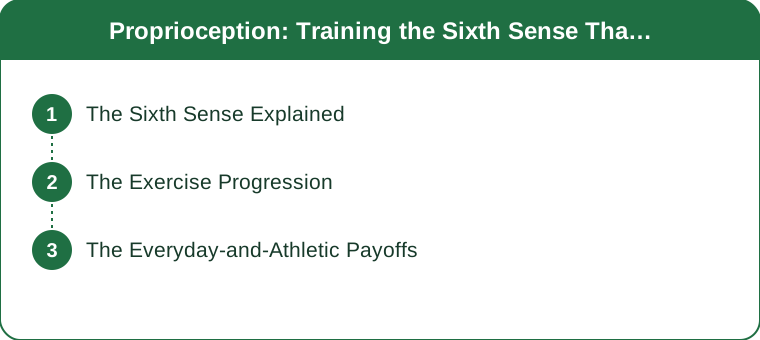
The Sixth Sense Explained
What proprioception is: the definition (the body’s sense of its own position and movement — the knowing-where-your-limbs-are without looking; the internal GPS), the how-it-works basics (the sensors in muscles, joints and tendons feeding the brain — the constant position-updates; the system behind the catch-yourself reflex), the use-it-or-lose-it reality (the proprioception that dulls with age and inactivity and sharpens with training — the trainable sense; the balance chapter’s why-start-now urgency), the injury-and-decline connection (the poor proprioception raising fall-and-injury risk — the sensor-system that rehab rebuilds; the ankle-that-keeps-rolling problem), and the everyone-benefits frame (the proprioception training serving the fall-prevention-senior AND the performance-athlete — the vestibular-balance chapter’s companion sense; the broad payoff).

The Exercise Progression
Sharpening the sense, step by step: the eyes-closed tier (the balance drills with vision removed — the proprioception forced to work when the eyes can’t help; the single-leg-eyes-closed challenge; the safety-near-support rule), the unstable-surface work (the foam pad, the balance cushion, the wobble board — the sensors challenged by the shifting ground; the progressive instability), the single-leg-everything (the single-leg-strength from the balance chapter as proprioception training — the stand, the reach, the mini-squat on one leg), the dynamic-balance drills (the walking-heel-to-toe, the balance-with-movement, the reach-in-all-directions — the moving proprioception; the real-life relevance), the sport-and-agility tier (the hops, the landings, the direction-changes for the athletic — the reactive proprioception; the injury-prevention for sport), and the gradual-progression note (the harder-as-you-improve principle — the challenge that keeps sharpening; the start-safe, progress-steadily).
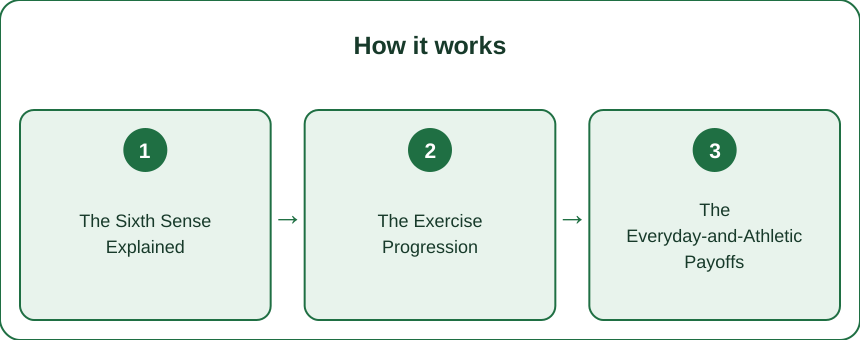
The Everyday-and-Athletic Payoffs
Why it’s worth training: the fall-prevention win (the proprioception that catches the stumble — the older-adult independence; the balance-chapter’s fall-safety goal; the trip-that-doesn’t-become-a-fall), the injury-prevention benefit (the sharper sensors protecting the ankles, knees and joints — the sprain-prevention; the reactive-catch that saves the joint), the athletic-performance edge (the better body-awareness improving agility, landing and control — the sport-and-movement quality; the performance layer), the aging-well angle (the proprioception maintained as a longevity-and-independence investment — the ageless-fitness thesis; the sense worth keeping sharp), the everyday-confidence gain (the moving-through-the-world with more sureness — the icy-sidewalk, the uneven-trail confidence), and the frame (proprioception as the trainable sixth sense that keeps you upright — the eyes-closed, unstable-surface and single-leg work that sharpens it; the quiet system worth training for grandmas and athletes alike). Close the eyes, wobble on purpose, balance on one leg: the sixth sense, sharpened.
Proprioception — your body’s sense of where it is in space — is the quiet system that catches your stumbles, and it sharpens with training. Practice eyes-closed balance, unstable-surface work and single-leg drills. It prevents falls for grandmas and injuries for athletes; a trainable sixth sense worth honing.
Keep Reading
This article is for general informational purposes only and is not medical advice. Always consult a qualified health professional for guidance specific to you.