5 Eyes-Closed Balance Drills That Take Your Training to the Next Level
Quick Answer: Closing your eyes during balance work removes visual feedback, forcing your body to rely more on proprioception (your joints and muscles sensing position) and your inner ear — which is exactly why it’s harder and why it should only be added once open-eyed balance work feels genuinely stable, always near a wall or counter for safety.
You’ve mastered standing on one leg with your eyes open, no wobble, no problem. Then you close your eyes for three seconds and suddenly feel like you’re on a boat. That gap is the whole point of this next progression.

Look 1: The Safety Setup, Before Anything Else
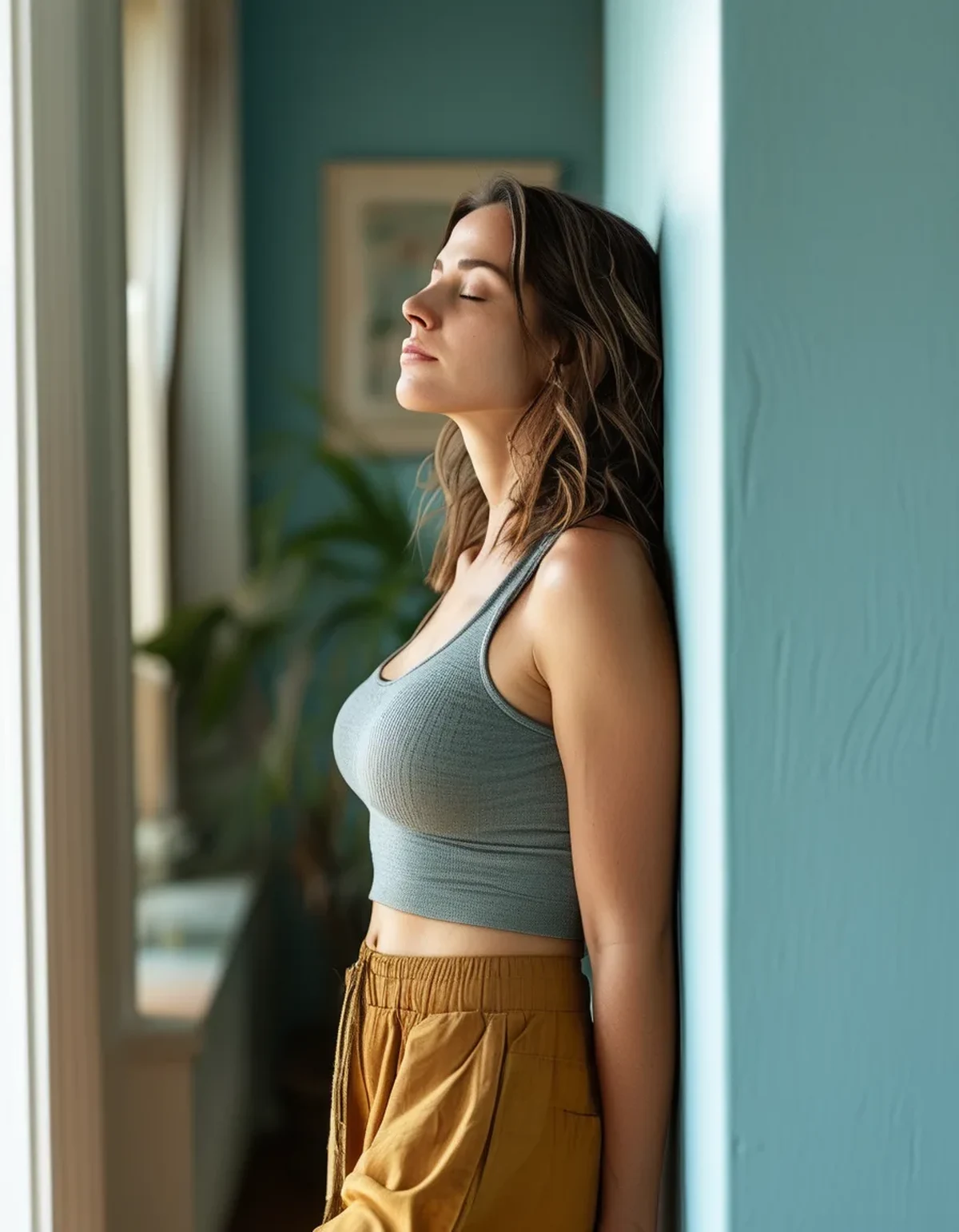
Always start eyes-closed work within arm’s reach of a wall or counter, never in open floor space, since the fall risk is real even for people with strong balance otherwise. Test the movement with eyes open first to confirm you’re stable before ever closing your eyes.
This isn’t overly cautious — it’s the standard first step recommended by balance and physical therapy professionals before any eyes-closed progression.
Look 2: Two-Foot Stance, Eyes Closed
Start standing with feet hip-width apart, eyes open for 10 seconds to confirm stability, then close your eyes for 10-15 seconds. This is the true beginner entry point — even this simple version noticeably increases the challenge for most people the first time.
Repeat 3 times, and don’t be surprised if you sway more than expected; that’s your vestibular system doing extra work it doesn’t normally have to do.
Look 3: Narrow Stance Progression
Once two-foot eyes-closed feels manageable, narrow your stance to feet together, then eventually a heel-to-toe tandem stance, each time starting eyes-open for a few seconds before closing them. Each narrowing step meaningfully increases difficulty, so don’t skip straight to the hardest version.
Give each stance width at least a week of practice, 2-3 short sessions, before progressing to the next. If a narrower stance suddenly feels much harder than expected, that’s useful information, not a failure — it tells you exactly where your balance system needs more work.
Look 4: Single-Leg, Eyes Closed
This is a genuinely advanced step — single-leg standing with eyes closed for even 5 seconds is difficult for most people, including many who exercise regularly. Keep your hand hovering near the wall, not gripping it, so you can catch yourself instantly if needed.
Aim for 5 seconds per side to start, building toward 15-20 seconds over several weeks of consistent practice.
What Nobody Tells You About Eyes-Closed Balance Training
Most people assume eyes-closed balance is just a harder version of the same skill, but it actually trains a different system — your proprioceptive and vestibular input take over almost entirely once vision is removed. This is why some people with excellent visual-balance skills struggle significantly here, and vice versa.
It’s also why this training matters beyond novelty: real-world falls often happen in low-light conditions (a dark hallway, getting up at night), which is functionally similar to closing your eyes during practice.
FAQ: Eyes-Closed Balance Training, Answered
How often should I practice eyes-closed balance drills?
2-3 short sessions a week is plenty to see improvement — this isn’t a movement that benefits from daily fatigue-inducing volume, since good form matters more than reps.
Is it normal to feel dizzy during these drills?
Mild disorientation the first few times is common as your vestibular system adjusts, but ongoing dizziness, nausea, or spinning sensations should be checked out by a doctor rather than pushed through.
Do I need to master eyes-open balance first?
Yes — eyes-closed work should only be added once the same stance feels stable and controlled with eyes open, otherwise you’re just adding fall risk without the intended training benefit.
Can eyes-closed balance training actually reduce my fall risk over time?
Many balance and fall-prevention programs include eyes-closed or reduced-vision drills specifically because everyday falls often happen in low-light conditions, so practicing without visual feedback can build more transferable stability than eyes-open training alone.
TL;DR:
- Eyes-closed balance work removes visual feedback and trains proprioception and the inner ear directly
- Always stay within arm’s reach of a wall or counter, and test each stance eyes-open first
- Progress in order: two-foot stance, narrow stance, tandem stance, then single-leg
- Give each progression at least a week before moving to the next level
Start with 10 seconds of two-foot eyes-closed standing today, right next to your kitchen counter.
Keep Reading
This article is for general informational purposes only and is not medical advice. Always consult a qualified health professional for guidance specific to you.