Why Your Balance Isn't Improving Despite Practicing Every Week
Quick Answer: Balance training stalls when the same exercise stays too easy for too long — your nervous system adapts to a fixed challenge within a few weeks. Progressing difficulty (eyes closed, unstable surface, added movement) is the missing variable, not more repetition of the same drill.
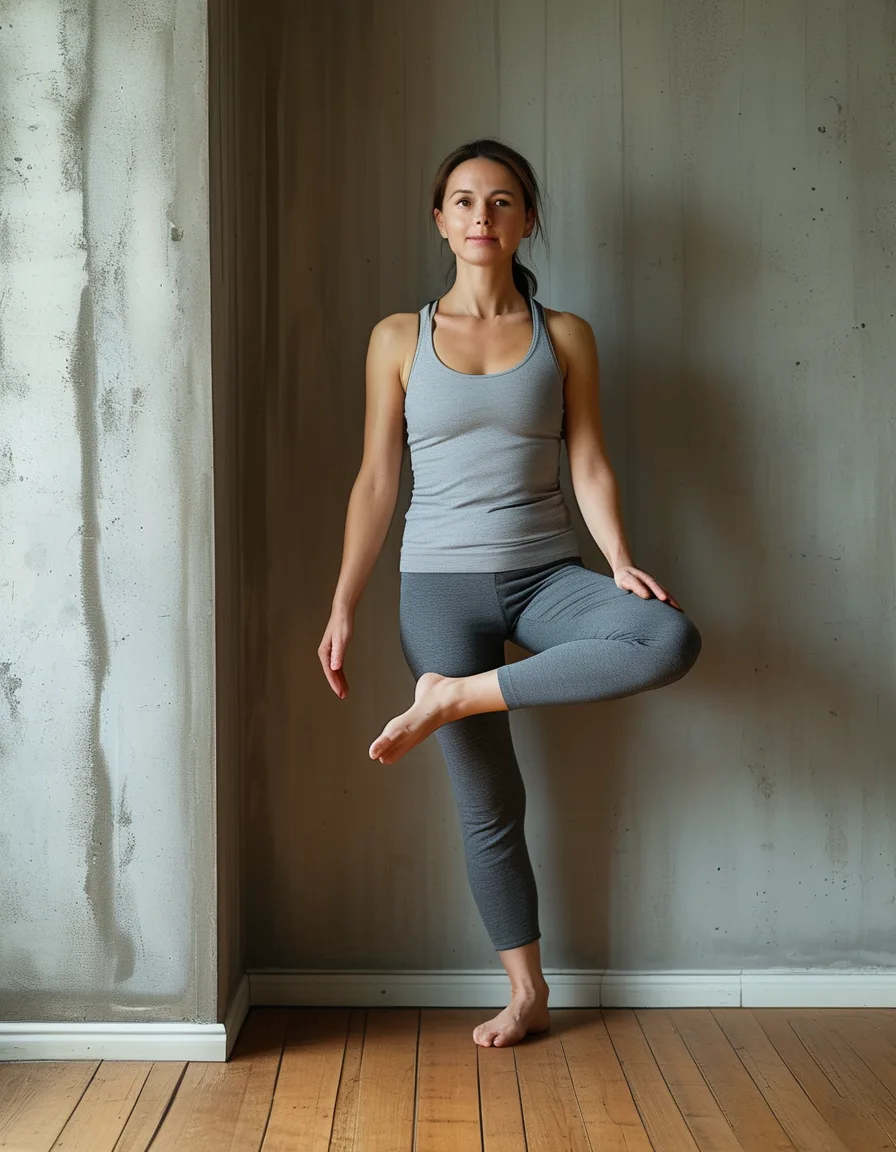
You’ve held a one-leg stance for 30 seconds every day for a month. It’s not getting easier, and it’s not translating to steadier steps on uneven ground either. That plateau has a specific, fixable cause.
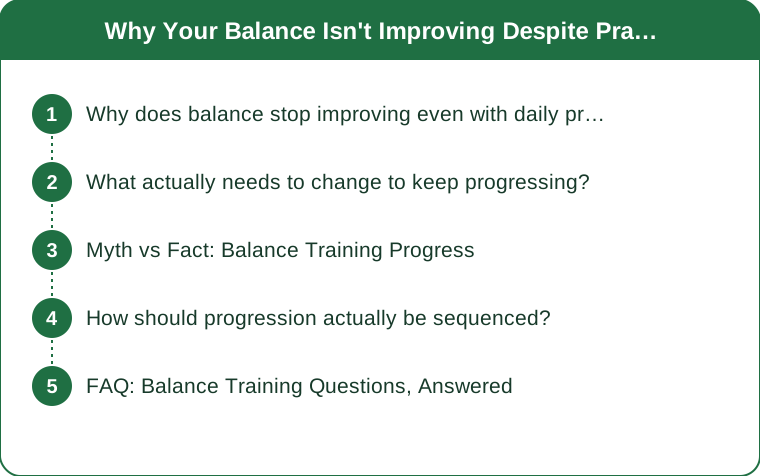
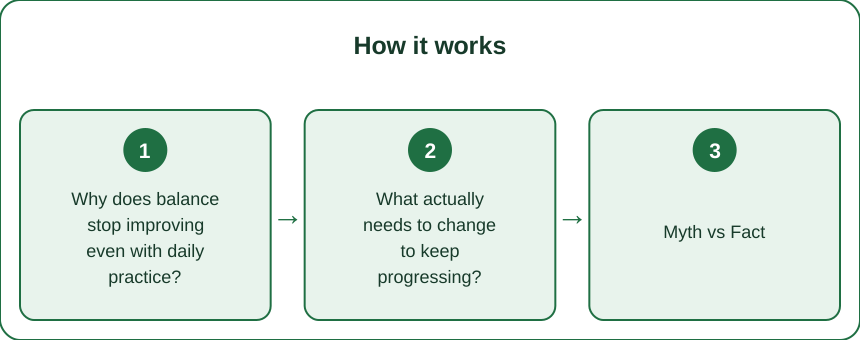
Why does balance stop improving even with daily practice?
Your nervous system adapts to a specific, fixed challenge within roughly 2-3 weeks of consistent practice — once a one-leg hold on stable ground stops feeling wobbly, it’s stopped providing a new training stimulus, even if you keep doing it daily.
Balance training works through progressive challenge to your sensory systems (vision, inner ear, joint position sense), not through repetition volume. Repeating an easy version doesn’t force new adaptation, the same way lifting the same light weight forever doesn’t build new strength.
What actually needs to change to keep progressing?
One variable at a time: close your eyes (removes visual input, forcing more reliance on inner ear and joint sense), stand on an unstable surface like a folded towel or foam pad, or add a movement like a slow head turn while balancing.
Changing one variable every 2-3 weeks — once the current version feels stable for 30+ seconds — keeps providing the challenge your nervous system needs to keep adapting.

Myth vs Fact: Balance Training Progress
Myth: Balance is mostly about ankle and core strength. Fact: Balance is primarily a sensory integration skill — how well your brain combines vision, inner ear, and joint position feedback — strength supports it but isn’t the main driver of improvement.
Myth: If you can hold a pose for a long time, you’ve mastered that level. Fact: Once you can hold something for 30-45 seconds without wobbling, that’s the exact signal to progress, not to keep repeating it — holding longer past that point adds little further benefit.
Myth: Balance training is mainly for older adults. Fact: Balance capacity naturally declines from the 30s onward in people who don’t specifically train it — starting earlier builds a bigger buffer before age-related decline becomes noticeable.
How should progression actually be sequenced?
A reasonable order: 1) stable-ground eyes-open hold, 2) stable-ground eyes-closed hold, 3) unstable-surface eyes-open, 4) unstable-surface eyes-closed, 5) unstable-surface with added movement (reaching, head turns).
Move to the next stage only once the current one holds for 30+ seconds without significant wobble — usually every 2-3 weeks with consistent practice, not sooner.
FAQ: Balance Training Questions, Answered
How often should I train balance to see progress?
3-4 sessions a week of 5-10 minutes shows steady progression for most people — daily isn’t required if you’re progressing difficulty correctly.
Is it normal for balance to be much worse on one side?
A mild difference between sides is common, but a large, persistent gap (one side stable, the other consistently failing) is worth mentioning to a physical therapist.
Does balance training actually reduce fall risk?
Yes — progressive balance training is one of the more evidence-supported interventions for reducing fall risk over time, particularly when difficulty is regularly increased rather than held constant.
TL;DR:
- Balance plateaus because the nervous system adapts to a fixed challenge in 2-3 weeks
- Progression (eyes closed, unstable surface, added movement) is the real lever, not more reps
- Once you hold 30-45 seconds cleanly, that’s your cue to progress, not repeat
- 3-4 sessions/week of progressively harder drills beats daily practice of the same easy one
Check what level you’re currently doing — if it’s felt easy for more than 2 weeks, that’s your sign to add one new challenge today.
Keep Reading
This article is for general informational purposes only and is not medical advice. Always consult a qualified health professional for guidance specific to you.