5 Balance Drills You Can Actually Fit Into Everyday Moments
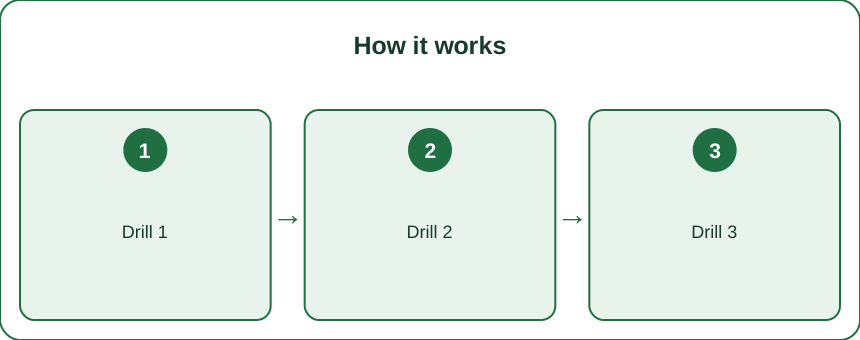
Quick Answer: Balance improves fastest with frequent, brief practice rather than occasional long sessions — single-leg stands while brushing teeth, heel-to-toe walks in a hallway, counter-supported single-leg reaches, standing on one foot while waiting for coffee, and slow directional weight shifts while doing dishes all fit naturally into moments you’re already standing.
Formal balance workouts are easy to skip, but balance actually responds well to short, frequent practice — which means the small dead moments already built into your day are a genuinely effective place to build it.
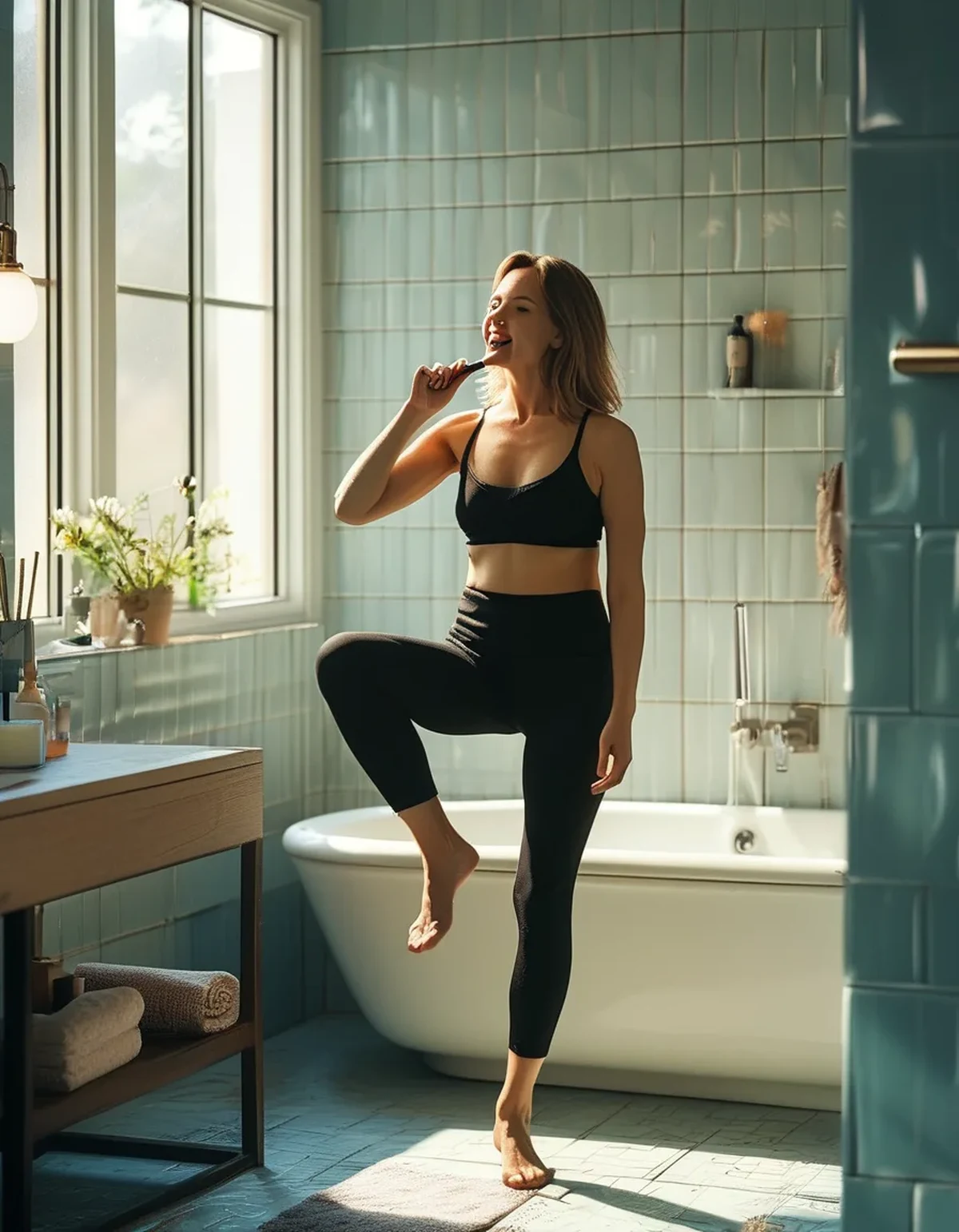
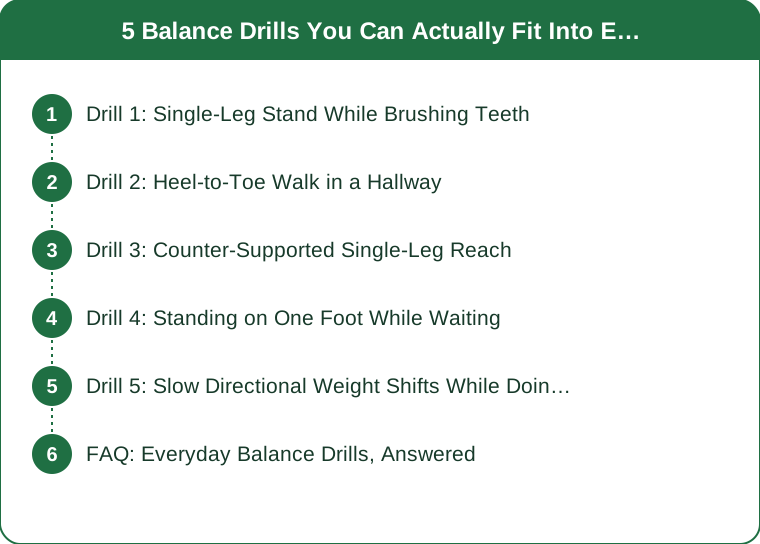
Drill 1: Single-Leg Stand While Brushing Teeth
Standing on one foot for the full two minutes of brushing, switching legs halfway, turns an already-committed two minutes into consistent daily balance practice without adding any extra time to your routine. Holding onto the counter lightly at first is fine — the goal is gradual, not immediate, independence from support.
Drill 2: Heel-to-Toe Walk in a Hallway
Walking a hallway placing the heel of one foot directly in front of the toes of the other, narrowing your base of support forces active balance correction with every step, building the same skill used in fall-prevention research, using nothing but a hallway you already walk through daily.
Drill 3: Counter-Supported Single-Leg Reach
Standing near a kitchen counter, lift one foot slightly off the ground and reach the opposite hand forward, to the side, and behind you, keeping light fingertip contact with the counter for safety. This drill trains dynamic balance — balance while moving — which is more functionally useful than static standing balance alone.

Drill 4: Standing on One Foot While Waiting
Any moment spent waiting — for coffee to brew, a microwave to finish, an elevator to arrive — is a free opportunity for 20-30 seconds of single-leg standing practice, turning otherwise wasted waiting time into consistent, low-effort balance training.
Drill 5: Slow Directional Weight Shifts While Doing Dishes
While standing at the sink, slowly shift weight from foot to foot, then front to back, in slow, controlled movements. This trains the ankle and hip strategies your body uses to correct balance in daily life, and doing it during an already-standing task means it costs you no additional time.
FAQ: Everyday Balance Drills, Answered
Do I need to hold onto something for these drills, or should I go without support?
Start with light support (a counter or wall) if you’re newer to balance training, and gradually reduce reliance on it as your stability improves — there’s no need to force unsupported practice before you’re ready.
How often do these drills need to be done to see improvement?
Daily, brief practice (even a few minutes spread across these moments) tends to produce better results than one longer, occasional session, since balance responds well to frequency.
Are these drills useful for older adults specifically concerned about fall risk?
Yes — this type of frequent, functional balance practice is commonly recommended in fall-prevention guidance, though anyone with significant balance concerns should check with a doctor or physical therapist before starting.
TL;DR:
- Balance responds well to short, frequent practice, not just dedicated workout sessions
- Everyday moments (brushing teeth, waiting for coffee, doing dishes) are enough time to build it
- Dynamic drills (reaching while balancing) add functional value beyond static standing
- Light support is fine to start with — reduce it gradually as stability improves
This is general information, not medical advice — check with a doctor or physical therapist if fall risk or balance concerns are significant.
Keep Reading
This article is for general informational purposes only and is not medical advice. Always consult a qualified health professional for guidance specific to you.